
AI That Knows Why

In this week’s article, we collaborate with Stuart Frost, the CEO and Founder of Geminos Software, to explore new AI advancements that provide insights into HOW and WHY things happen.
We’ll explore:
Why AI decision-making is the future of AI
The limitations of today’s correlational AI
How causal knowledge graphs will reshape the landscape
Why enterprise AI needs to combine LLMs with causality
Additionally, we’ll gain insight into a real-world solution, Geminos Causeway, which is delivering the power of AI causality today.
What The Podcast
In a recent Next Frontiers of AI podcast, we spoke with Stuart Frost, the CEO and Founder of Geminos Software, about the advent of Casual AI and the algorithmic science of why things happen.
The Need to Understand Why
The limitations of traditional AI have become increasingly evident in recent years. Ultimately, no matter how sophisticated a predictive model or LLM may be, it merely establishes a correlation between a behavior or event and an outcome.
However, that doesn’t mean that the outcome occurred BECAUSE of the behavior or event.
To achieve meaningful, strategic outcomes, businesses need AI that can accurately understand the precise chain of events leading to that outcome and how an outcome may change when the world around it changes.
AI must transition from making predictions to making judgments.
This is because judgments are central to decision-making. For AI to make judgments, it must comprehend the cause-and-effect mechanisms across complex chains of events to recommend the best course of action to achieve a desired outcome.
Even for corporate officers, causal AI is becoming crucial to support their decision-making as regulatory and ethical demands call for explainable and accountable AI models.

For example, as noted in a recent LinkedIn post by Mark Stouse, the CEO of Proof Analytics, the 2023 Delaware Court of Chancery’s landmark fiduciary duty ruling has reshaped corporate officers’ accountability by holding them personally liable for negligence, not merely intentional misconduct.
In this context, causal AI is pivotal because of its inherent transparency, interpretability, and explainability. Such clarity enables them to articulate their decision-making processes to shareholders and regulatory authorities, mitigating risks of negligence regarding AI outcomes.
A Real-World Perspective
As part of this research, I sat down with Stuart Frost, the CEO and Founder of Geminos Software, to discuss his perspectives on how causal AI is transforming the enterprise landscape.
Central to our conversation was the concept of AI that not only predicts outcomes but also understands why these outcomes occur — termed aptly by Geminos as “AI that Knows Why.”
Stuart also shared his experience working on the front lines to help numerous enterprises use the Geminos Causeway platform to apply causal AI to address some of their most critical challenges.
As enterprises increasingly embrace AI, most face significant challenges. Surveys indicate that over 50% of AI projects in the industry still fail to make it to deployment, and among those that do, many still struggle to provide actionable insights. As Stuart Frost succinctly pointed out:
“Our customers don’t want another AI technology; they want to make better decisions. That’s their job at the end of the day.”
This comment underscores a critical industry gap — traditional AI, including LLMs and Gen AI, focuses on creating predictions over understanding why things happen.
“The fundamental issue with LLMs is they are just big correlational engines. They don’t understand the causal effects. They don’t understand why things happen or what will happen if conditions change.”
Correlating an outcome differs from saying that the outcome happened because of the behavior or event. Correlation does not imply causation.
Equating them risks creating an incubator for hallucinations and bias, which can result in flawed business decisions. In addition, since correlational AI operates as a “black box” and is incapable of explaining itself, it creates a major trust issue. People only trust what they understand.
Business leaders naturally want to interrogate potential decisions to understand “why”, as people only trust what they understand. Frost underscores the impact of adopting causal methods:
“Once you start going down that path of causal AI as opposed to correlational AI, you never go back. It’s just better”
“I love going into customer situations where they’ve struggled, they’ve tried various forms of AI, and we can go in and show them a better way of doing it within weeks.”
Causal Knowledge Graphs
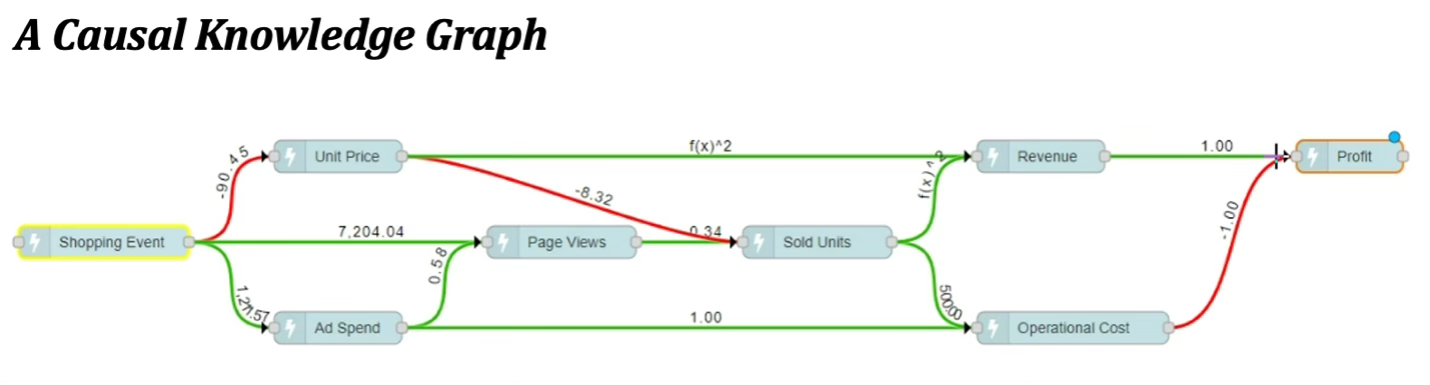
A central innovation that helped to show businesses a better way was Geminos’ implementation of causal knowledge graphs, which enrich traditional knowledge graphs by incorporating causal relationships.
Traditional knowledge graphs represent static knowledge — entities and their relationships — but lack dynamic, actionable insights. Causal knowledge graphs, however, integrate dynamics and allow businesses to:
Identify root causes of problems quickly
Simulate scenarios with counterfactual analysis
Predict how changes in one aspect of a business impact others
As Frost described:
“Traditional knowledge graphs capture static knowledge… but causality and causal models give you dynamic knowledge. For example, if this thing changes, so will this thing. Adding causal knowledge completes that picture to account for the dynamic nature of business decision-making.”
Such a system provides a vital foundation for scalable AI solutions that enable enterprises to solve complex, interconnected problems. Stuart Frost illustrated a clear use case from industrial operations:
“Let’s say I’m in a refinery managing a process. Classic AI might indicate that downtime is increasing but doesn’t explain why or what to do about it.
With causal AI, we develop a model that understands how a change in a variable- such as increasing the temperature- affects other variables in the system, like the pressure in the pipes.
This approach enables us to identify root causes and precisely model what interventions to implement.”
This capability transforms decision-making from reactive guessing into proactive, informed actions that directly impact business results. Frost reinforced this practical advantage:
“Once you’ve ventured down this causal knowledge graph path, you don’t revert as a data scientist. It just solves problems that today’s AI cannot.
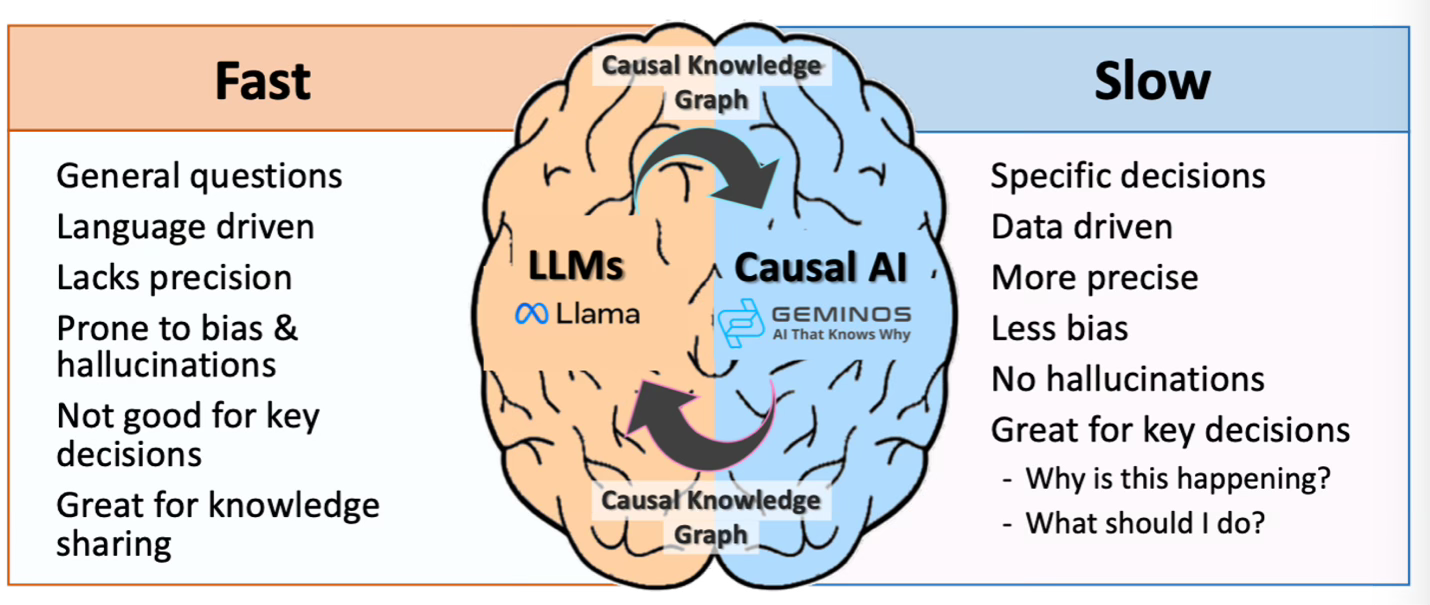
Another important point Frost raised parallels Daniel Kahneman’s concept of “thinking fast and slow.” Businesses face both quick, intuitive decisions (“fast”) and more analytical, strategic decisions (“slow”).
LLMs, augmented with causal knowledge graphs — what Frost calls Causal Retrieval-Augmented Generation (CRAG) — can provide accurate responses for operational decisions. By using Pearl’s causal math methodologies, deeper domain knowledge and know-how is accounted for.
“We use LLMs to build a knowledge graph, use the knowledge graph to drive more causal models at scale, and feed that experience back into the causal knowledge graph. Once that gets rolling, it becomes really powerful as a continuously learning and adapting system”
Next-generation AI systems will undoubtedly evolve to integrate both capabilities into a unified function, much like the human brain has progressed over time. LLMs resemble the limbic system, which drives instinctive actions based on memories. Causal knowledge graphs build upon this to emulate the cerebral cortex, which encodes explicit memories into tacit know-how and replicates the neocortex to facilitate higher-order thinking reasoning.
“LLMs and generative AI can be useful tools, but they don’t know what our business is about, what our constraints are, or what our cause-effect chains look like. A causal knowledge graph is the missing piece — it provides a structured foundation for all AI initiatives, from agentic AI to AI decision intelligence to enterprise automation.”
Furthermore, this approach reduces reliance on LLMs’ brute-force methods, which demand massive datasets and extensive computing resources. In contrast, causal models can significantly diminish this need by concentrating on what truly matters, thereby delivering sophisticated analytics without substantial computing resources.
As Front emphasized, this hybrid approach tackles the inherent limitations of current AI methods while providing more flexible, interpretable, and robust AI solutions
“We use LLMs to extract knowledge and build a causal knowledge graph. Then, we use that graph to drive causal models at scale, which help businesses make better decisions. Those causal insights then get fed back into the causal graph — creating a virtuous cycle of learning and improving decision-making across the enterprise.”
According to Stuart Frost, the key to enterprise-scale AI is deploying AI that understands cause and effect across the entire business by integrating knowledge and decision chains within a unified AI system.
These systems will orchestrate an ecosystem of collaborative AI agents and predictive, generative, and casual models to assist individuals in making better decisions that align with the overarching goals of a broader organizational process. Furthermore, they will continuously learn in a shared environment through human intervention and the outcomes of real-world, decision-based consequences.
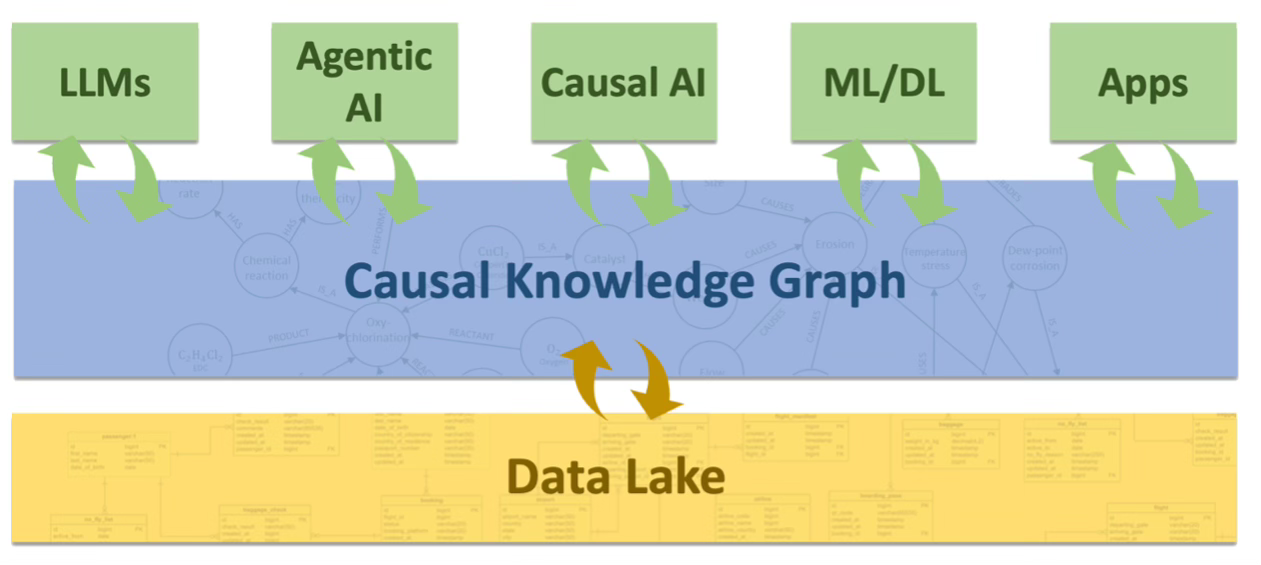
As Frost pointed out:
“Decisions in an enterprise aren’t made in isolation — they’re interconnected. If you optimize one part of a process, it might create inefficiencies elsewhere. A causal knowledge graph allows businesses to understand these dependencies and make smarter, system-wide decisions, interlinking micro-decisions into macro decisions.”
The brains of these organizational systems will be weaved together by deploying causal component models (think, AI decision intelligence micro-services) across a workflow. Causal component models divide a system into distinct, manageable components representing specific causal relationships or dependencies. These components are then interconnected to form a complete causal model of an organizational system, allowing them to examine how different causal relationships combine to produce overall organizational behavior.
“For the first time, we have a scientific, mathematically underpinned basis for dealing with all that complexity so that when an individual worker makes a decision, it gets wired into the broader impact on the business.”
This quote underscores how Causal AI enables enterprises to connect decision points across different functions by ensuring that every choice is made with a clear understanding of its downstream impact. Instead of making siloed decisions, organizations can now manage decision chains in a systematic, explainable, and data-driven manner.
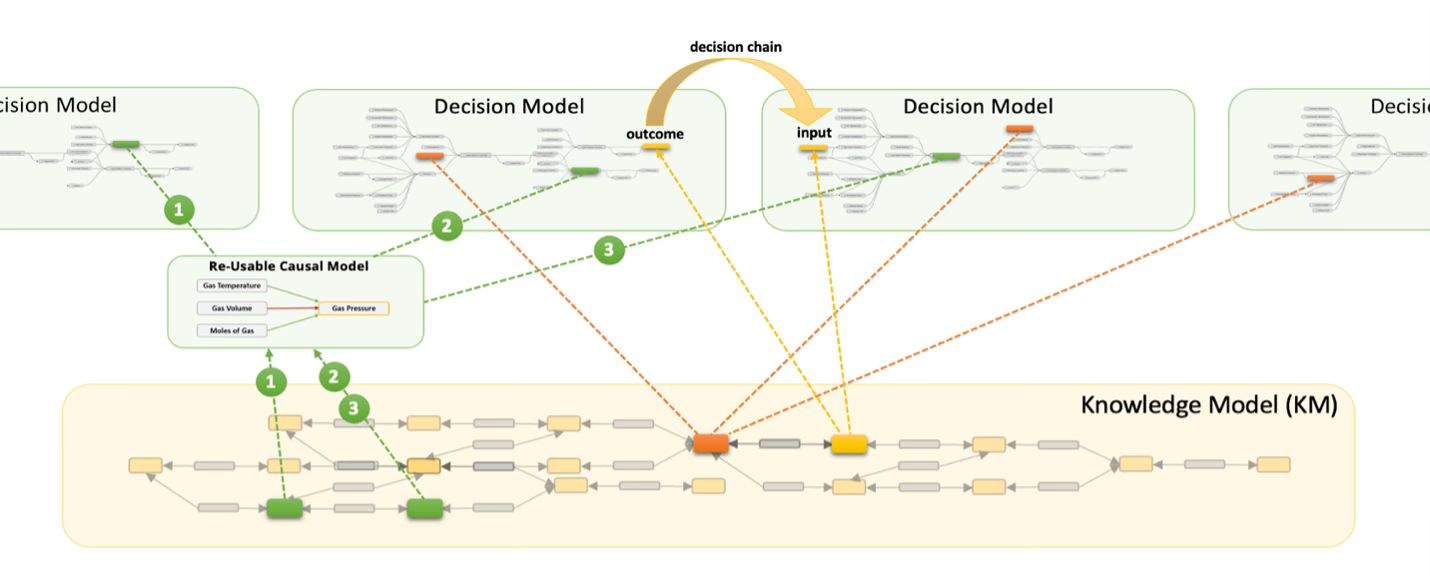
The industry’s next wave of AI innovation is undoubtedly progressing towards causal reasoning, bolstered by causal knowledge structures. Frost’s insights emphasize the inevitability of this shift and the opportunity to create future-state digital businesses, beginning now.
“We’re not just talking about isolated AI applications anymore. We’re talking about a unified system where AI understands how the business actually operates — not how people think it operates. AI that knows why things happen will transform enterprise decision-making at every level.”
“Once you’ve seen the power of causal AI — once you understand how decisions across an organization connect and impact each other — you don’t go back. It’s just better. And for the first time, we can scale this across entire enterprises.”
Geminos Causeway
Geminos Software provides a comprehensive suite of Causal AI solutions designed to enhance business decision-making by uncovering cause-and-effect relationships within data.
Their Geminos Causeway platform provides an end-to-end, low-code environment for modeling, building, and deploying Causal AI models, agents, and applications. It also excels at bridging the gap between data scientists and subject matter experts by providing a common visual language for collaboration.
As an example of how causal AI capabilities are additive to existing AI technologies and platforms, Geminos recently announced that they are integrating their Causeway platform with IBM’s watsonx suite.
The partnership will enable businesses to create enterprise-grade causal AI solutions by combining IBM’s Granite domain models and Geminos’ innovative Causal Retrieval-Augmented Generation (CRAG) technologies within IBM’s flagship AI platform.

Summary
Causal AI is a significant advancement in the progression of AI, as current correlative-based designs will eventually hinder the development of new innovations. Microsoft Research recently stated —
“Causal machine learning is poised to be the next AI revolution.”
Perhaps the time is now to start preparing for this new frontier in AI.
Subscribe to the Next Frontiers of AI Podcast on the SiliconANGLE Media YouTube Channel or on Spotify to stay up to speed.
Thanks for reading. Feedback is always appreciated.
As always, contact me if I can help you on this journey by messaging me here or on LinkedIn.
